Case Study: The New Era of Landlord Possession Claims
- Case Studies
- 5th Aug 2026
The Challenge On 1 May 2025, the Renters’ Rights Act came into force and abolished the Section 21 “no-fault” eviction notice overnight – a mechanism landlords had relied on for decades to regain possession of residential property on a non-fault basis. In its place, landlords must now use a revised Section 8 notice. This requires […]
By Taru Soni
mlplaw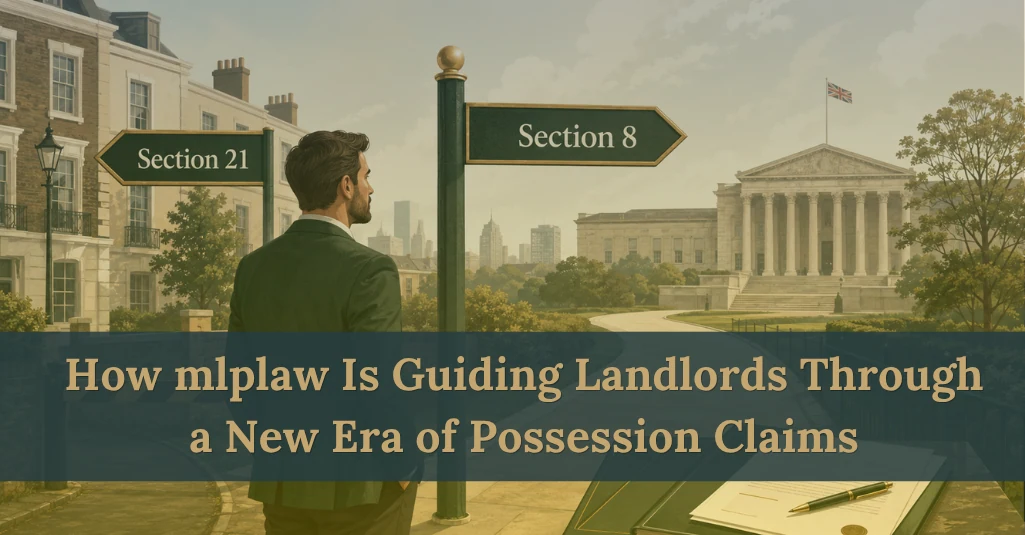
The Challenge
On 1 May 2025, the Renters’ Rights Act came into force and abolished the Section 21 “no-fault” eviction notice overnight – a mechanism landlords had relied on for decades to regain possession of residential property on a non-fault basis. In its place, landlords must now use a revised Section 8 notice. This requires a valid, evidenced ground for eviction. Landlords must also comply with strict notice periods. In most contested cases, they must pursue a full possession claim through the courts. This replaces the accelerated, paper-based route previously available under Section 21.
For our property management and landlord clients, the change has created real uncertainty. Overnight, a straightforward, predictable process became a far more technical one, layered with prescribed grounds, mandatory versus discretionary distinctions, and evidential thresholds that didn’t previously exist.
One such case reached us as soon as the Act took effect. The landlord was introduced by a long-standing property management client. They were dealing with a tenant whose serious antisocial behaviour was affecting other residents at the property. With no Section 21 route available, this was exactly the kind of complex, multi-layered matter the new regime was designed to test.
Our Approach
Deep, current legislative expertise. Our Dispute Resolution team didn’t wait for the dust to settle. From the moment the Renters’ Rights Act was announced, we immersed ourselves in its details. We attended seminars and followed new guidance as it emerged. We also developed a thorough understanding of the 17 prescribed grounds under the new Section 8 regime. This work began long before much of the market had caught up. That meant that when clients started calling with questions, we already had answers.
Serving on multiple grounds, for maximum protection. Rather than relying on a single ground, our team adopted a belt-and-braces approach. We served the notice using both a mandatory ground and a supporting discretionary ground. This gave the claim the strongest possible foundation. We carefully calculated and followed the longest notice period applying across the selected grounds. We also built a robust evidential case to support each ground. This nuanced, tactical drafting requires specialist knowledge of how the different grounds interact.
Close, continuous client contact. Throughout the matter, our team maintained regular, direct contact with the client – staying briefed on every development as the tenant’s behaviour continued to unfold and factoring those updates into the evidence and witness statement being prepared. It’s a relationship built on more than a single instruction – meaning our advice is always grounded in a genuine understanding of their property portfolio and priorities.
Clarity in the face of a moving target. With little formal guidance available on how the revised Section 8 process would play out in practice, our team took the view that the safest course for clients was proper legal advice, not generic online guidance. We talked clients through exactly what each ground required, what evidence was needed, how the notice had to be served and proven, and what timeline they could realistically expect,
including the current pressures on the court system, which is working through a considerable backlog after many landlords rushed to issue possession proceedings ahead of the Section 21 transitional cut-off.
Why It Matters
This case reflects exactly the kind of work our Dispute Resolution team does best: taking a piece of brand-new, untested legislation and translating it into clear, practical, well-evidenced action for clients who simply want the right outcome for their property. Whether a claim proceeds smoothly or ends up tested in court, our clients can be confident that the groundwork – the notice, the grounds, the evidence, and the process has been prepared to the highest standard from day one.
As the Renters’ Rights Act continues to bed in, we expect matters like this to become increasingly common. Our team is ready.
If you’re navigating a possession matter under the Renters’ Rights Act, our Dispute Resolution team can help.
About the expert

Tracy Cundliffe
Senior Associate in Dispute Resolution
Tracy is a highly experienced solicitor with a distinguished legal career spanning nearly three decades. Since qualifying 28 years ago, Tracy has developed a formidable reputation in civil litigation, handling a diverse range of disputes for both respondents and claimants. Tracy’s expertise encompasses personal injury cases, complex motor fraud—including involvement with fraud rings and credit hire—alongside financial and commercial disputes. Her client list is as varied as her practice, having represented individuals, businesses of all sizes, local authorities, utility companies, and major finance houses. Tracy’s professional journey has seen her excel at renowned international law firms, where she has successfully led legal teams ranging from six to ninety lawyers, ensuring the consistent delivery of outstanding legal services. Recognized for a down-to-earth and proactive manner, Tracy is solution-focused and quick to identify the core issues in any dispute, allowing her to resolve matters efficiently and pragmatically. Beyond her professional commitments, Tracy enjoys long walks with her Cockerpoo, Molly, exploring new destinations abroad, and sampling new culinary experiences at a range of restaurants.
Arrange an appointment
Let’s start by getting to know you and your business - either on the phone or in person. Complete the form below and we’ll be in touch shortly.